Physical Address
304 North Cardinal St.
Dorchester Center, MA 02124
Physical Address
304 North Cardinal St.
Dorchester Center, MA 02124

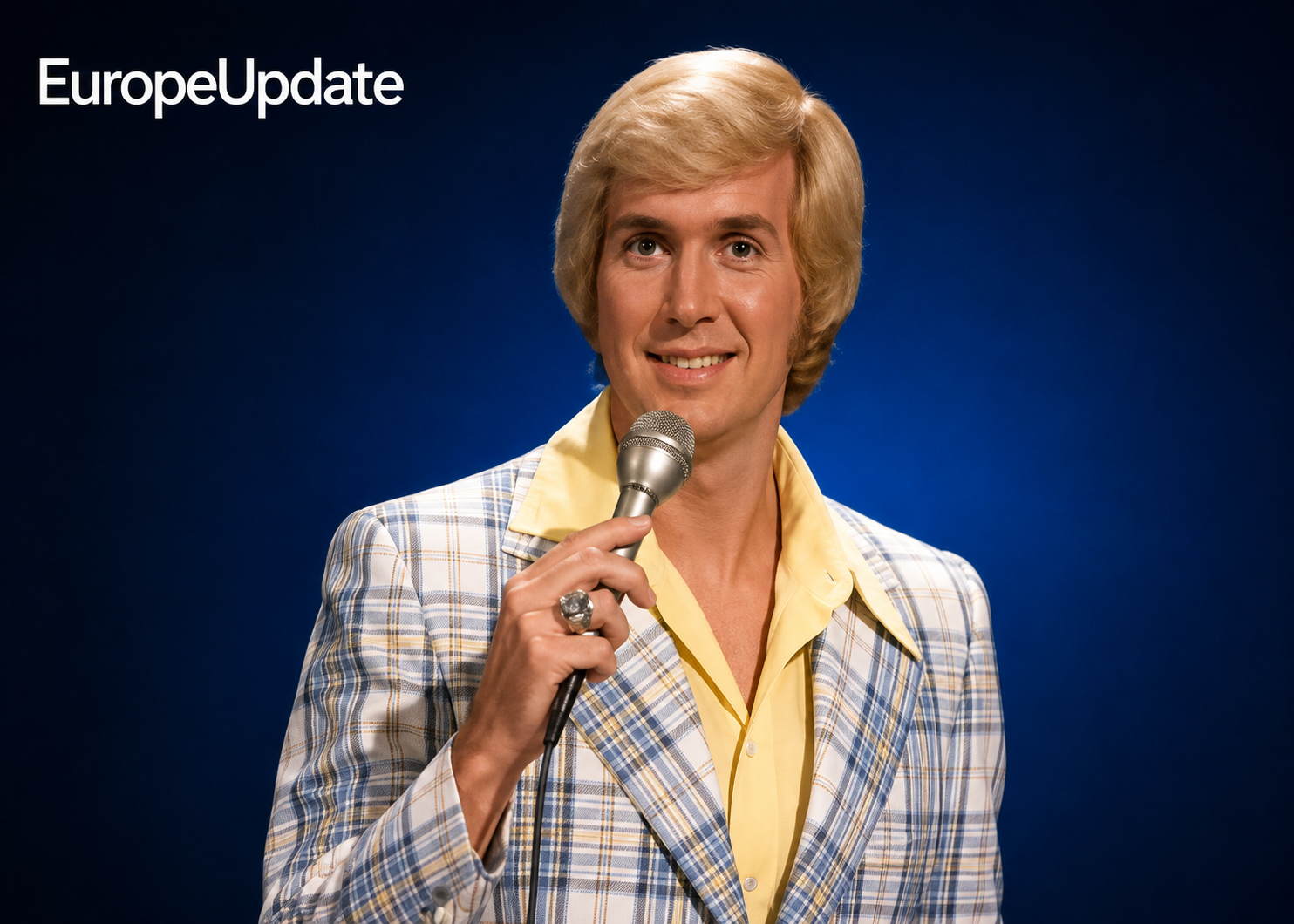
Tom Netherton’s net worth is often listed online as $5 million, but that number should not be treated as a confirmed figure.
Several entertainment websites publish different estimates. One site lists $5 million, while another gives $8 million and a separate page claims $10 million. None of those figures provides a verifiable breakdown of assets, property, investments, royalties, contracts or other income that would allow the estimate to be independently checked.
That distinction matters because Netherton died in 2018, meaning a modern “net worth” figure can easily become confused with an estimate of his estate, lifetime earnings or the value of his entertainment catalog.
The safest conclusion is therefore that Tom Netherton’s exact net worth was never publicly established through a reliable financial source. The frequently repeated $5 million figure can be mentioned as an online estimate, but it should not be presented as a documented fact.
What can be established is how Netherton built his career. His income came from several areas of entertainment rather than from a single television job: television performances, recordings, touring, stage work and other appearances were all part of his professional life.
| Attribute | Detail |
|---|---|
| Full name | Thomas Harold Netherton Jr. |
| Known as | Tom Netherton |
| Born | January 11, 1947 |
| Birthplace | Munich, Germany |
| Profession | Singer and performer |
| Best known for | The Lawrence Welk Show |
| Lawrence Welk years | 1973–early 1980s |
| Voice | Baritone |
| Military service | U.S. Army |
| Autobiography | In the Morning of My Life |
| Marital status | Never married |
| Died | January 7, 2018 |
| Age at death | 70 |
| Reported cause | Influenza and pneumonia |
| Exact net worth | Not publicly verified |
Netherton’s route to television was not a conventional entertainment-industry story. Born into an Army family in postwar Germany, he experienced a childhood shaped by his father’s military career. The family eventually settled in Bloomington, Minnesota, where Netherton spent his later school years.
He later entered the U.S. Army and served during the Vietnam War era. His musical ability remained part of his life during military service, including performances with Army and Air Force musical groups. Prairie Public’s account of his career describes his decision to leave the military path and pursue entertainment instead.
That transition eventually took him to North Dakota and the Medora Musical. The experience proved important because it put him in front of Harold and Sheila Schafer, who recognized his abilities and helped connect him with Lawrence Welk.
The story of that introduction became one of the more memorable episodes in Netherton’s career. According to Prairie Public’s historical account, the Schafers arranged for Netherton to meet Welk while Welk was in North Dakota. Netherton subsequently performed before a large audience in St. Paul, leading to an invitation to join Welk’s television program.
Joining The Lawrence Welk Show in 1973 transformed Netherton from a regional performer into a nationally recognized television singer.
His appearance fit the program’s traditional variety-show format, where singers, musicians and dancers performed a mixture of popular standards, show tunes and inspirational material. Netherton’s baritone voice became his signature, and contemporary biographical sources consistently identify his long tenure with Welk as the central achievement of his career.
The program also gave him a platform for recording. During and after his Welk years, he released music in both religious and secular styles. The Christian Music Archive identifies him primarily with inspirational music, while AllMusic’s discography documents several releases associated with his recording career.
A 1975 appearance on The Dating Game also demonstrated that Netherton had become recognizable beyond the Welk audience. He later documented parts of his personal and professional journey in his 1979 autobiography, In the Morning of My Life.
For readers interested in his television legacy, Prairie Public’s historical profile of Tom Netherton provides useful background on the path from the Medora Musical to the Welk program.
Netherton did not depend entirely on television appearances.
After his years with Welk, he continued performing around the United States, appearing at civic centers, opera houses, college campuses and fairs. Prairie Public also records his work in musical theater, including performances in Carousel and Oklahoma!.
His recording catalog provides another important part of the financial picture. Among the titles associated with him are My Favorite Hymns, What a Friend We Have in Jesus, Love Songs, The Lord’s Prayer, Reflection, How Great Thou Art and Just As I Am.
These releases help explain why simply describing Netherton as a television singer understates the scope of his working career. He was also a recording artist and touring performer whose professional activity continued beyond his regular television appearances.
His public work extended into religious broadcasting as well. Sources document appearances connected with The 700 Club, The Hour of Power and Billy Graham crusades.
He also appeared in commercial advertising, including campaigns for Rose Milk skincare lotion and Nabisco’s Triscuits crackers.
Taken together, these activities demonstrate multiple potential sources of career income. They still do not provide enough information to calculate a precise lifetime fortune.
Netherton maintained a relatively private personal life compared with many television personalities.
Biographical accounts state that he never married. His public identity was therefore closely associated with his professional work rather than a celebrity marriage or family business.
By 2007, he was living in Goshen, Indiana, where he performed at local programs and entertained senior citizens at the Greencroft Senior Center, according to a report cited in biographical records.
His later career continued to reflect the combination of music, faith and community performance that had characterized much of his professional life.
Netherton died on January 7, 2018, only four days before his 71st birthday. Contemporary accounts state that his brother Brad announced his death and that influenza developed into pneumonia.
His death marked the end of a career that had connected military service, gospel music, television variety entertainment and live performance.
The most useful way to understand Tom Netherton’s finances is to separate documented career activity from internet speculation.
There is good evidence for a long professional career. Netherton spent years on a nationally distributed television program, released numerous recordings, toured after television, performed in theater and made commercial and television appearances.
What is missing is an authoritative financial record showing what he earned from those activities and what he retained after expenses, taxes and other obligations.
That is why the widely circulated $5 million estimate should be approached carefully. Celebrity-wealth websites often reproduce figures without showing the underlying calculation. The existence of multiple competing estimates — $5 million, $8 million and $10 million — is itself evidence that there is no consensus figure.
Netherton’s career was substantial enough to make a comfortable financial position plausible, but plausibility is not proof. Without estate records, tax documents, verified property records or a direct financial disclosure, assigning a precise dollar amount would go beyond the available evidence.
An exact figure has not been reliably documented. Some celebrity-wealth websites estimate $5 million, while others publish higher figures, but those estimates lack transparent financial documentation.
He became nationally known through his long-running role as a singer on The Lawrence Welk Show, joining the program in 1973 after performing with the Medora Musical in North Dakota.
Netherton was particularly associated with his deep baritone voice. His recorded work included Christian, gospel and secular material.
Yes. He published In the Morning of My Life in 1979 with Marie Chapian. The autobiography provides another source for understanding his personal journey and career.
Available biographical sources state that he never married.
He was 70 when he died on January 7, 2018. He would have turned 71 four days later.
Tom Netherton’s financial legacy is less certain than his entertainment legacy. Although online sources frequently attach a multimillion-dollar figure to Tom Netherton Net Worth, no reliable public financial record confirms an exact amount.
What is firmly documented is a diverse career: military service, national television, recording, touring, musical theater, religious broadcasting and commercial appearances. His decades of work explain why he remains remembered by Lawrence Welk Show audiences, even though the precise value of the wealth he accumulated remains unknown.
Editor fact-check note: The commonly quoted $5 million net-worth estimate could not be independently verified through a primary financial or estate source and should be labeled an online estimate if published. The competing $8 million and $10 million figures are likewise unsupported by transparent financial records.