Physical Address
304 North Cardinal St.
Dorchester Center, MA 02124
Physical Address
304 North Cardinal St.
Dorchester Center, MA 02124

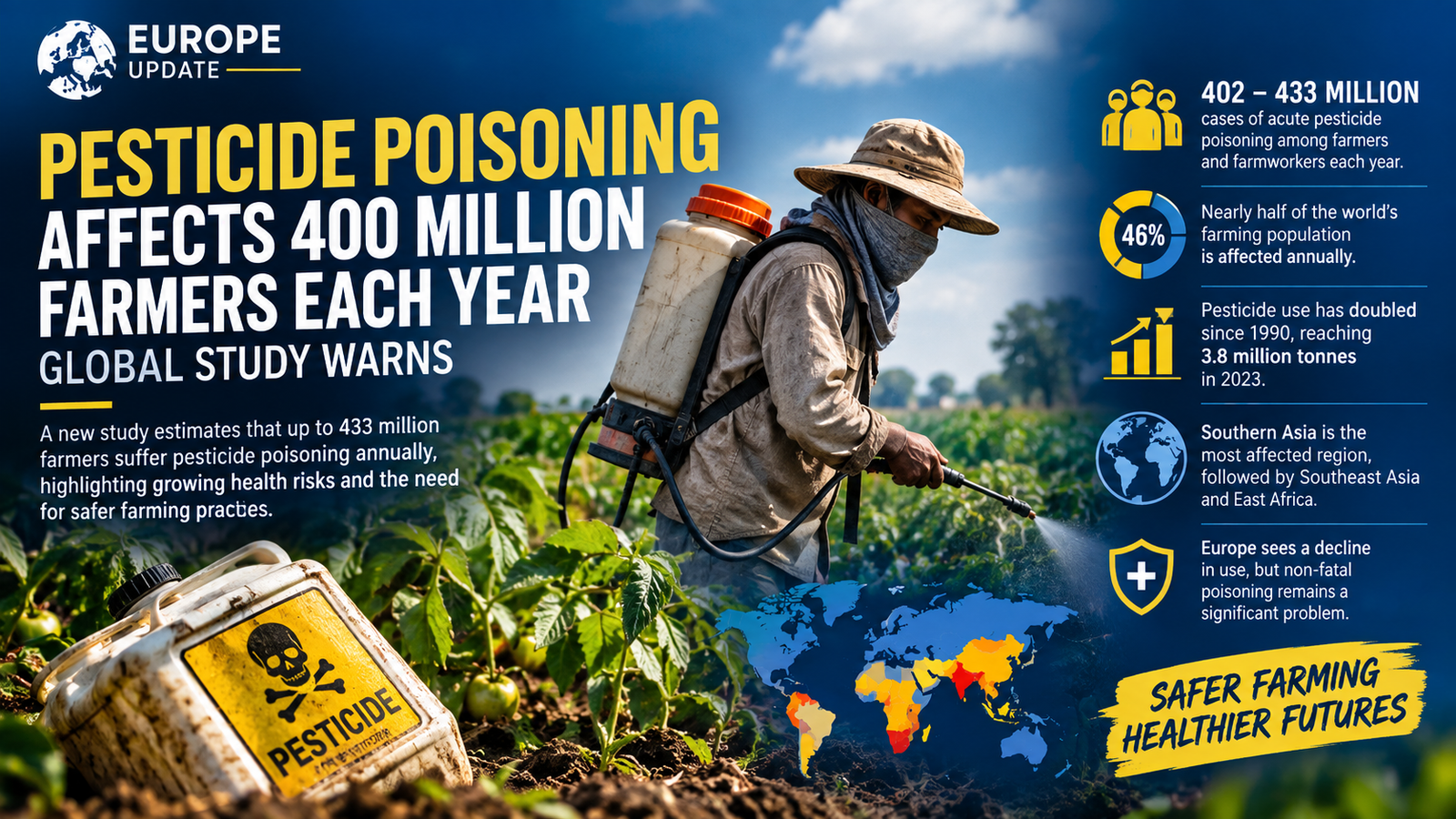
A new global study has highlighted the serious health risks faced by farmers and agricultural workers, estimating that between 402 million and 433 million people suffer acute pesticide poisoning every year.
The findings suggest that nearly half of the world’s farming population is exposed to harmful pesticide effects annually, raising fresh concerns about workplace safety, public health and the growing use of agricultural chemicals.
Researchers estimate that approximately 46% of the world’s 934 million farmers and farmworkers experience acute pesticide poisoning each year.
Pesticide poisoning can occur when workers inhale chemical sprays, absorb substances through their skin or accidentally consume contaminated food and water. Symptoms may include headaches, dizziness, nausea, breathing difficulties and, in severe cases, organ damage or death.
The study, published in Frontiers in Public Health, warns that the scale of the problem remains underestimated because many cases are never diagnosed or officially recorded.
Limited access to healthcare, poor reporting systems and a lack of medical training can make it difficult to identify pesticide-related illnesses, particularly in rural communities.
The researchers also found that global pesticide consumption has continued to rise despite decades of international efforts to reduce the health and environmental damage caused by these chemicals.
Annual pesticide use reached approximately 3.8 million tonnes in 2023, nearly twice the amount recorded in 1990.
Experts say the increase reflects the growing pressure on farmers to produce more food, control pests and protect crops from disease. However, they warn that increased chemical use can expose agricultural workers and their families to long-term health risks.
Susan Haffmans of Pesticide Action Network Germany, which commissioned the report, said farmers should not have to risk their health while producing food for the world.
The study identified southern Asia as the region most affected by pesticide poisoning, followed by Southeast Asia and East Africa.
Burkina Faso recorded the highest national rate, with nearly 84% of farmers estimated to experience pesticide poisoning each year.
The researchers said the figures demonstrate the urgent need for stronger safety rules, better protective equipment and improved access to medical services in farming communities.
Many workers in developing countries also face difficulties obtaining gloves, masks and protective clothing. In some areas, farmers may apply pesticides without proper training or use equipment that offers little protection from chemical exposure.
Europe was identified as the only major region where pesticide consumption has declined since 1990. The authors linked the reduction to stricter regulations and stronger controls on hazardous agricultural chemicals.
The estimated number of pesticide-related deaths in Europe remains comparatively low, ranging from around two annually in Western Europe to approximately 60 in Eastern Europe.
However, non-fatal poisoning continues to affect a large number of workers.
Southern Europe has the highest estimated poisoning rate on the continent, at approximately 32%, representing more than 1.5 million cases each year. In Western and Eastern Europe, the estimated rate is around 6%.
Researchers cautioned that the figures for Eastern Europe may not reflect the full situation because available data is limited. The region’s estimates are currently based largely on information from Hungary.
The study’s authors are calling for urgent action at international and national levels. Their recommendations include stronger monitoring systems, improved training for agricultural workers and healthcare professionals, and better reporting of pesticide-related illnesses.
They also urged governments to support the United Nations’ goal of phasing out highly hazardous pesticides by 2035.
Researchers said the lack of reliable data remains one of the biggest obstacles to tackling the problem. Without accurate information, it is difficult to compare poisoning rates between countries or identify the chemicals and working practices responsible for the greatest harm.
Sheila Willis of Pesticide Action Network in the United Kingdom said underreporting remains widespread because many communities have limited access to healthcare and medical professionals may not be trained to recognise pesticide poisoning.
Health experts say reducing pesticide exposure will require more than stricter regulations. Farmers also need access to safer products, practical training and affordable alternatives that can protect crops without placing workers at unnecessary risk.
The effects of pesticide exposure can extend beyond the workplace. Chemicals brought home on clothing, footwear or equipment may also expose farmers’ families, including children.
The study concludes that protecting agricultural workers must become a central part of global food and environmental policy. As pesticide use continues to increase in many parts of the world, researchers warn that stronger action is needed to prevent millions of avoidable illnesses each year.