Physical Address
304 North Cardinal St.
Dorchester Center, MA 02124
Physical Address
304 North Cardinal St.
Dorchester Center, MA 02124

By Europe Update Staff
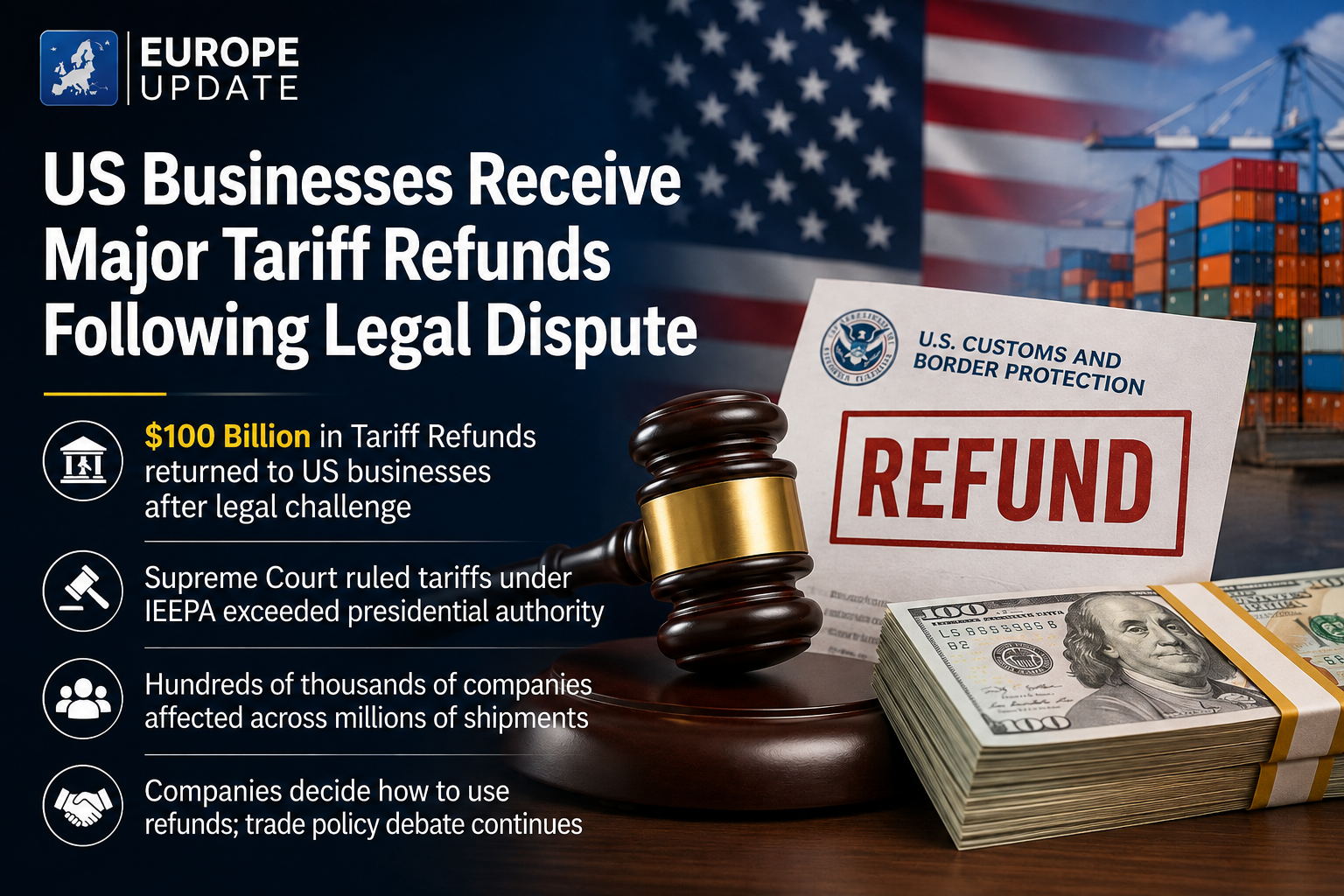
The US government has returned approximately $100 billion in tariff payments to American businesses following a major legal challenge against former President Donald Trump’s controversial “Liberation Day” tariffs.
The refunds were processed through US Customs and Border Protection after a Supreme Court decision questioned the government’s authority to impose the import taxes without direct approval from Congress.
The payments represent a significant portion of th
e tariff revenue collected under the policy and have provided financial relief to thousands of companies affected by higher import costs.
The refund process began after the US Supreme Court ruled that the administration had exceeded its legal authority when introducing the tariffs under the International Emergency Economic Powers Act (IEEPA).
The 1977 law allows presidents to respond to certain national emergencies, but the court found that it did not provide unlimited power to create broad import taxes.
The decision forced trade officials to review billions of dollars in payments collected from businesses importing goods into the United States.
According to trade records, hundreds of thousands of importers had paid tariffs across millions of shipments before the refund process began.
Customs officials reported that a significant amount of the collected money has already been returned, while additional claims remain under review.
Some businesses are still waiting for payments because their refund applications require further processing or missing financial information.
Trump’s tariff strategy was designed as an economic tool to influence international trade and pressure foreign governments.
However, many US companies argued that the policy increased their operating costs because importers are generally responsible for paying tariffs when goods enter the country.
Businesses said the additional expenses contributed to higher prices for products, affecting supply chains and consumers.
Several large companies that received tariff refunds have announced plans to use part of the money to support customers and reduce financial pressure.
However, companies are not legally required to pass these refunds directly to consumers. Each business can decide how the returned funds are allocated.
Despite the large-scale refunds, the Trump administration has continued using tariffs as a key part of its economic strategy.
New trade measures targeting several countries have kept tariffs at the center of political debate, with supporters arguing they protect American industries while critics warn they could increase costs and create uncertainty for businesses.
The refund program has attracted international attention because US tariff decisions can affect global supply chains, manufacturers, and international trade relationships.
European businesses and policymakers are also monitoring developments as changes in US trade policy may influence prices, exports, and economic cooperation.
The return of $100 billion in tariff payments marks a major development in the ongoing debate over US trade policy. While the refunds provide relief to businesses affected by import taxes, questions remain about the future direction of American tariffs and their impact on global commerce.
Read Also: europeupdate.co.uk



[…] Read Also: Trump Administration Returns $100 Billion in Tariff Payments After Court Challenge […]