Physical Address
304 North Cardinal St.
Dorchester Center, MA 02124
Physical Address
304 North Cardinal St.
Dorchester Center, MA 02124

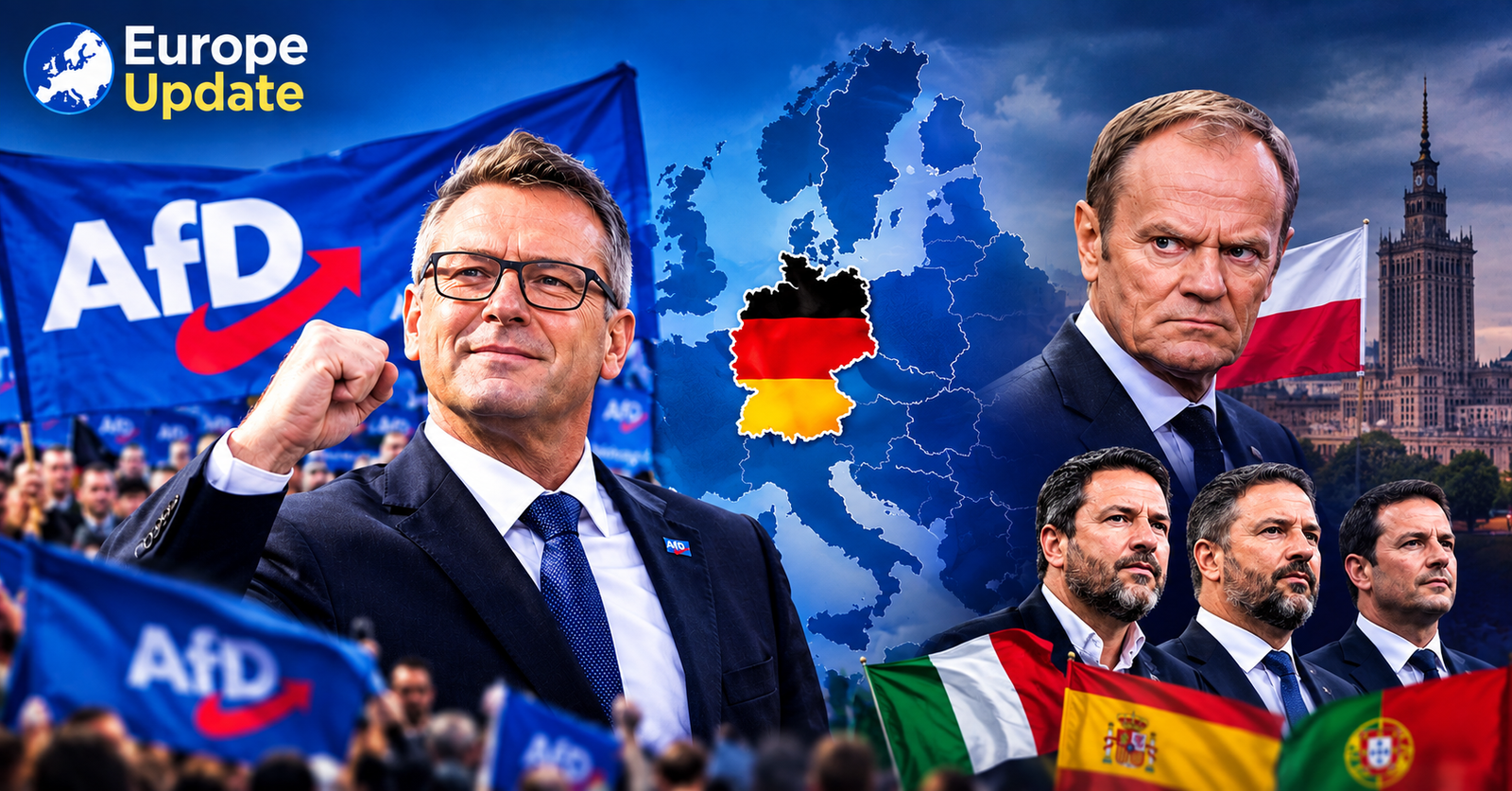
Germany’s far-right Alternative for Germany has secured a historic election victory in Saxony-Anhalt, prompting celebrations among Europe’s populist right and strong criticism from Poland’s prime minister.
Germany’s political landscape has shifted sharply after the Alternative for Germany (AfD) won a decisive victory in Sunday’s Saxony-Anhalt state election, turning the result into a major test of the country’s political direction.
The party secured 43.8% of the vote, more than double its support in the region five years ago. The result places the AfD well ahead of Chancellor Friedrich Merz’s Christian Democratic Union (CDU), which received 17.2% and lost roughly half of its previous support.
The outcome has also exposed a growing divide across Europe, with nationalist parties welcoming the result while mainstream political leaders warn of its wider consequences.
AfD co-leader Alice Weidel described the result as a clear mandate for the party to take responsibility in Saxony-Anhalt.
Speaking after the election, Weidel said the AfD had campaigned on prioritising Germany’s national interests. She also called for tighter border controls, deportations of people required to leave the country and reductions in what she described as unnecessary spending.
The party has also renewed its demand for early federal elections. Weidel said she expected Merz to be replaced before Christmas, adding further pressure on the chancellor’s government.
AfD lead candidate Ulrich Siegmund used the result to attack Merz directly, arguing that the chancellor’s continued presence in office had helped the AfD’s campaign.
The victory marks a significant breakthrough for a party that has long faced resistance from Germany’s established political forces.
The election result represents a serious setback for the CDU, which had previously been one of the dominant political forces in Saxony-Anhalt.
The party won 15 seats, while the Social Democrats, Greens and Left Party each secured eight seats. The AfD’s strong performance has changed the balance of power in the state and raised questions about how Germany’s mainstream parties will respond.
In Berlin, the result was viewed as a direct challenge to Merz’s leadership. The chancellor followed the vote count from CDU headquarters but did not address the public.
CDU general secretary Franziska Hoppermann described the result as “a very difficult result” for the party. State premier Sven Schulze offered a restrained response, reflecting the political sensitivity surrounding the AfD’s victory.
The result is likely to intensify debate within Germany over whether the established parties should change their approach to immigration, economic policy and national security.
The strongest reaction from abroad came from Poland, where Prime Minister Donald Tusk sharply criticised politicians celebrating the AfD’s success.
In a post on X, Tusk said that “only idiots or traitors can rejoice at the triumph of the AfD,” referring to members of Poland’s Konfederacja and Law and Justice (PiS) parties.
His comments highlight the deep political tensions surrounding the AfD, particularly among European leaders who view the party’s rise as a challenge to the continent’s established political order.
The reaction from Warsaw also reflects wider concerns about the influence of nationalist movements across the European Union and their positions on issues such as immigration, Ukraine and European integration.
While mainstream leaders expressed concern, several prominent figures on Europe’s populist right celebrated the AfD’s performance.
Italy’s Deputy Prime Minister Matteo Salvini said the result showed that “another Europe is possible.” His comments linked the German election to the broader political ambitions of nationalist and right-wing parties across the continent.
Spain’s Vox leader Santiago Abascal described the victory as “a great hope for Germany and for Europe,” while Portugal’s André Ventura called it a historic result and connected the outcome to public anger over immigration.
The responses demonstrate how the AfD’s success is being interpreted beyond Germany. For its supporters, the election is evidence of growing public dissatisfaction with traditional political parties. For its critics, it is a warning about the increasing strength of the far right.
The Saxony-Anhalt election comes as Germany prepares for several more state elections this month, making the result particularly significant.
The AfD’s performance could influence campaign strategies across the country, especially as established parties face pressure to address concerns over immigration, public spending and economic uncertainty.
However, winning votes does not automatically translate into governing power. The AfD still faces political resistance from other parties, and questions remain over whether it can convert its electoral success into a broader governing role.
For Merz, the result creates an immediate political challenge. His government must respond to the CDU’s losses while preventing further support from moving towards the AfD.
For Europe, the election has become more than a regional contest. It is now a symbol of the growing struggle between traditional political parties and nationalist movements seeking a larger role in shaping the continent’s future.
The AfD’s victory shows that Germany’s political debate is becoming increasingly connected to wider European disputes over immigration, national sovereignty and the direction of the European Union.
The celebration from populist parties and condemnation from leaders such as Tusk underline the contrasting visions emerging across Europe.
As Germany moves towards further state elections, the central question will be whether the AfD’s success in Saxony-Anhalt represents a regional breakthrough or the beginning of a much broader political shift.
For now, the result has delivered a clear message: Germany’s political centre is under pressure, and Europe’s populist right believes it has gained new momentum.