Physical Address
304 North Cardinal St.
Dorchester Center, MA 02124

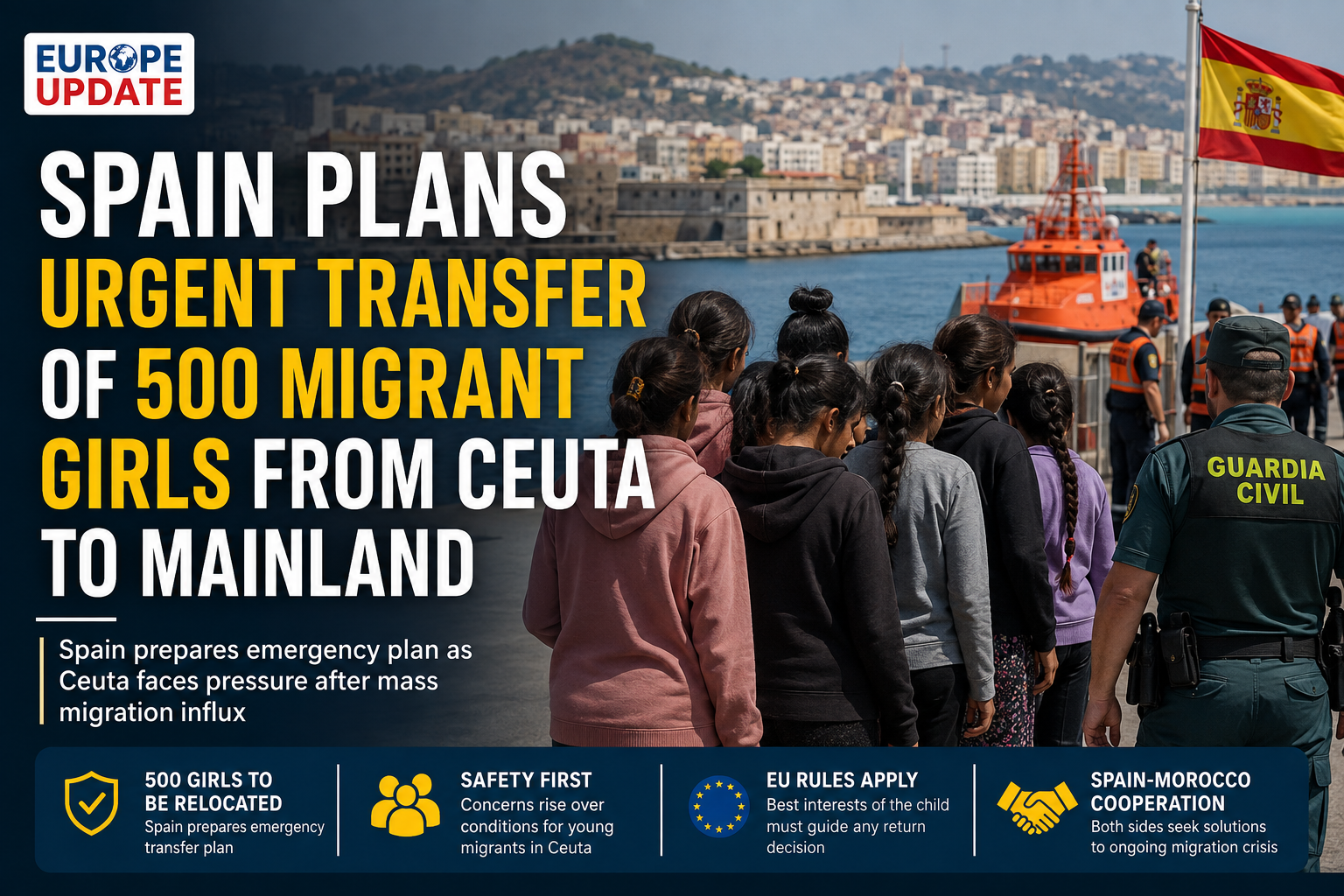


Spain is preparing an emergency plan to transfer around 500 unaccompanied migrant girls from Ceuta to mainland Spain, as authorities face growing pressure on the North African enclave following the mass migration influx at the end of July.
The move comes amid a wider disagreement over how unaccompanied minors remaining in Ceuta should be managed. While the Spanish government is preparing a mainland reception programme, European Union officials have stressed that returns to Morocco can take place under EU rules when the necessary legal safeguards are met.
Spain’s Ministry for Youth and Children says work is underway on an urgent mechanism to move approximately 500 girls from Ceuta to the Spanish mainland.
The proposed arrangement is intended to ease pressure on local child-protection services while providing vulnerable minors with safer and more suitable accommodation.
The government is considering several options, including compulsory solidarity-based reception involving Spain’s autonomous communities, family-based placements and specialised facilities operated by child-protection organisations.
The situation has become increasingly difficult for Ceuta, where local authorities have struggled to accommodate the large number of minors who arrived during the migration surge.
Spanish authorities had identified and transferred more than 2,000 minors to Ceuta’s administration by 18 August, according to the information provided by the Spanish government.
External source: Spanish Interior Ministry – Ceuta migration situation
Ceuta is a small Spanish autonomous city on the North African coast. Its geographical position makes it particularly vulnerable to sudden increases in migration from neighbouring Morocco.
Following the late-July influx, reception facilities came under significant pressure. Earlier reporting indicated that more than 1,000 unaccompanied minors were still in the enclave after the majority of migrants had returned to Morocco.
The proposed relocation of the girls is therefore being presented as an emergency child-protection measure rather than simply a migration-management operation.
Spanish officials have emphasised that the welfare and safety of the minors must remain central to decisions about their accommodation and future.
The situation has also raised concerns about the safety of vulnerable migrants in Ceuta.
Recent reports have described overcrowded accommodation and difficult living conditions following the mass arrival. Humanitarian organisations and local groups have called for additional protection, particularly for women and children.
Reuters reported that migrant women in Ceuta had raised concerns about harassment and unsafe conditions while waiting for registration and accommodation.
This has increased pressure on Spanish authorities to move vulnerable groups into safer facilities as quickly as possible.
The proposed transfer has become part of a wider disagreement over what should happen to unaccompanied minors who arrived during the crisis.
European officials have indicated that the return of migrants to Morocco may be possible under EU migration rules, provided that individual cases are assessed and the necessary safeguards are respected.
However, EU rules also provide specific protections for unaccompanied children.
Under EU return law, authorities must consider the best interests of the child before deciding whether an unaccompanied minor should be returned. Before removal, authorities must also establish that the child will be received by a family member, appointed guardian or appropriate reception facility.
External source: European Commission – EU Return and Readmission Policy
External source: EUR-Lex – Rules on the return of unaccompanied minors
Morocco has also called for the return of Moroccan citizens who remain in Ceuta following the mass crossing.
The Spanish Interior Ministry has previously highlighted cooperation with Moroccan authorities and said both countries had agreed to strengthen coordination to address irregular migration flows.
However, the situation involving minors is legally more complicated than the return of adults.
Any decision involving an unaccompanied child requires consideration of individual circumstances, family links and appropriate protection arrangements.
The European Union’s current migration framework places particular emphasis on protecting minors.
The European Commission says return procedures must respect fundamental rights, including access to asylum and the principle of non-refoulement. It also highlights additional procedural safeguards for vulnerable people, including children.
The European Union has also reached political agreement on a new Common European System for Returns, designed to make return procedures more coordinated while maintaining fundamental-rights protections.
External source: European Commission – New Common European System for Returns
The proposed mainland transfer is also creating political tensions within Spain.
Some autonomous communities have indicated that they do not want to accept additional unaccompanied minors from Ceuta. The Spanish central government has criticised what it considers a lack of solidarity between regions.
The dispute reflects a wider challenge facing Spain: how responsibility for unaccompanied minors should be shared when one territory experiences a sudden migration emergency.
The proposed system would seek to distribute responsibility more widely while avoiding further pressure on Ceuta’s already stretched child-protection services.
The Ceuta crisis highlights the difficult balance Spain must maintain between border management, relations with Morocco, EU migration policy and child protection.
For the Spanish government, moving the most vulnerable minors to mainland facilities could provide immediate relief to Ceuta.
For European officials, however, the longer-term issue is how returns, asylum procedures and child-protection obligations can operate together.
The EU’s migration framework makes clear that returns cannot simply be treated as automatic removals, particularly when unaccompanied minors are involved. Individual circumstances and the best interests of the child must remain central to the process.
Spain’s immediate priority is expected to be securing suitable accommodation for the approximately 500 girls targeted by the emergency transfer plan.
Authorities will also have to coordinate with autonomous communities, child-protection organisations and other institutions to determine where the minors will be accommodated and what support they will receive.
At the same time, Madrid and Rabat will face continued pressure to resolve the wider question of migrants who remain in Ceuta.
The coming weeks could therefore prove important not only for the children affected by the crisis but also for Spain-Morocco relations and the EU’s wider migration policy.
Read Also: Ukraine Retakes 26 Settlements in Major Southeastern Counteroffensive